

19 Oct, 2026

Essential Factors to Consider When Choosing Rice Suppliers in India

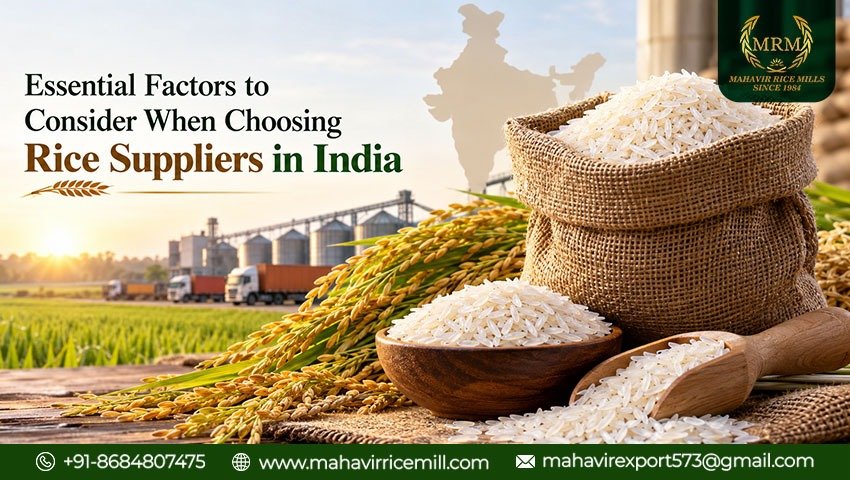
Best rice suppliers in India - Rice is a food for more than half the worlds people, which makes getting it a very important part of the supply chain for companies that sell it. When looking for rice finding the best rice suppliers in India is very important to make sure the rice has the right length, good smell and arrives on time. Going through the Indian farming market needs a smart way to check how good the suppliers are how they process the rice and if they follow international rules. In this blog we will talk about the things, the quality rules and the usual ways you should look at when choosing a good Indian rice partner.

Role and Ecosystem of Top Indian Rice Exporters

India is one of the makers and sellers of rice in the world especially known for its special Basmati rice and other types that can be used in many ways. The system for rice in India includes farming areas, modern places that process the rice and organized ways to send it out of the country.

Why Indian Rice Sourcing Matters

• Varietal Diversity: There are kinds of rice like long-grain Basmati (such as 1121 and 1509) and other types like Sharbati and PR11 that offer a wide range of choices for people all over the world.

• Cultivation Excellence: The special weather and good soil in India help make rice that stretches more smells better and feels nice when cooked.

• Advanced Processing: Indian mills use tools like optical sorters, ways to control aging and machines that pack the rice to meet what buyers in other countries want.


Infrastructure, Processing Capabilities, and Quality Standards

A suppliers setup affects how good the rice is, how clean it is and how safe it is so checking their operations is very important.

Key Infrastructure Aspects to Evaluate

• Milling and Processing Technology: Check if the best rice suppliers in India has up to date machines like ones that take off the husk polish the rice in many steps and sort by color to get rid of broken grains and other stuff.
• Aging Facilities: Real Basmati rice needs to age for a time (usually 12 to 24 months) to make it smell better cook fluffier and stretch more. Make sure the supplier has a place that keeps the temperature.
• Production Capacity: Look at how rice the supplier makes each day to see if they can handle big orders during the busy times without slowing down.

Global Compliance, Certifications, and Logistics Management


Keeping food safe following the rules and getting the rice to where it needs to go are very important when bringing in rice from countries.

Compliance and Logistics Pillars

• International Certifications: Look for certifications like ISO 22000, HACCP, FSSAI, GMP and the Halal which show that the supplier follows rules for the cleanliness and safety.
• Custom Packaging Options: Check if supplier can make sizes of packaging like 500g bags or the 1 Metric Ton big bags, using materials like Non-Woven PP, Jute or BOPP.
• Export and Customs Knowledge: Make sure the supplier handles checks before the rice is sent like the SGS or Intertek. Has papers that say the rice is safe. Also check if they are close to ports for fast delivery.

SUMMING UP

Picking the place to get rice means thinking about the machines they use the quality they meet and how they send the rice out. Working with people in the rice business means your company gets good rice that people like and follows the rules around the world. As one of the best rice suppliers in India, Mahavir Rice Mills keeps setting high standards for how rice is made sent out and grown in a way that helps the environment.

FAQs

Ans: Properly packed and stored Basmati rice maintains optimal quality for two years.

Ans: Aging reduces moisture content, enhances aroma and yields fluffier, longer cooked grains.

Ans: Advanced optical sorters and de stoners remove the visual impurities and foreign particles seamlessly.

Ans: Third party agencies like SGS or Intertek inspect quality before the final harbor loading.

whatsapp phone