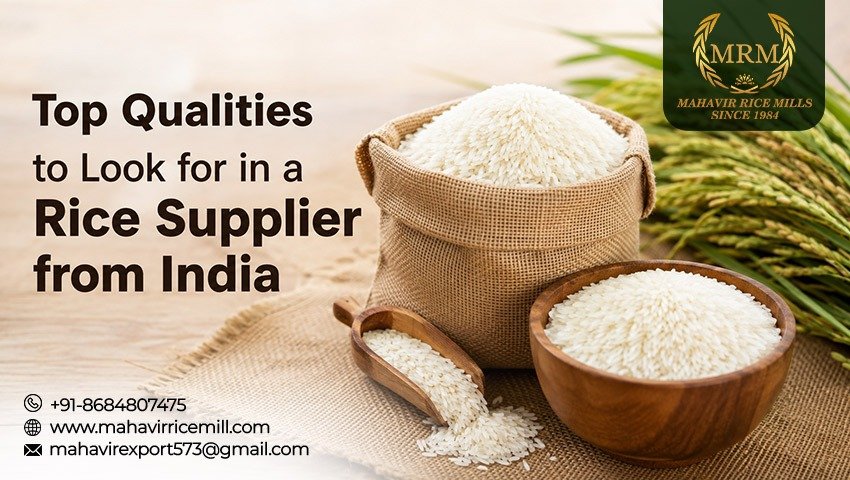

Rice Supplier from India - India is world's largest exporter of the rice, exporting more than 40% of the world's rice. When it comes to sourcing high quality grains from overseas sources, however, having a reliable partner who knows the rules and regulations in place is crucial, as well as the grain aging and logistics for the supply chain. By working with a vetted rice supplier from India, you can guarantee that your shipments reach your destination on time, meet the import laws of the region and are filled with pure quality rice. This is the blog you need on the key features you should consider when selecting an export partner for your business.
What Defines an Ideal International Rice Sourcing Partner?
Consider international agricultural vendor evaluation beyond just a consider of product pricing. There is a well-established vendor who is a business partner for the end-to-end global supply chain and who is directly tied to local farmers' communities.
Core Roles of an Agricultural Export Partner
• Sourcing Integrity: Paddy is being sourced from fertile agricultural areas to ensure that the right seed varieties are being cultivated.
• Milling Precision: Remove damaged and chalky grains from raw grains by using multi-stage polishers and optical color sorters and advanced de-stoners.
• Regulatory Compliance: Understanding and adhering to global trade regulations, sanitary and the customs requirements to prevent port delays.

Top Qualities to Look for in a Rice Supplier from India
When considering potential agricultural partners, consider the operational capabilities that affect grain quality, deliveries and the product integrity.
1. Robust Quality Control & Modern Infrastructure
A top tier vendor has modern processing operations that are run using the latest in automated equipment including Buhler color sorters to ensure each batch is produced to the same quality.
The grain types required for international markets exist to meet regional requirements and for the commercial purposes.
3. Transparent Logistics & International Certification
Optimized logistics operations guarantee smooth product flow from processing facilities to the overseas ports, maintaining product safety and the freshness.
Critical Benchmarks for Evaluating Suppliers
Prior to entering into procurement agreements, compare your potential supplier to these criteria to ensure that your supply chain remains protected:
• Purity and Sorting Standards: Importer shall ensure that the exporter will guarantee that the product is at least 95% pure and that, there will be no chalky or discolored grains. This gives a uniform appearance and the same texture on the retail shelf.
• Moisture Content Control: Ensure that moisture content is carefully kept under control (usually 12% - 13%). Correct moisture control ensures long shelf life and prevents fungi growth in long sea transports.
• Packaging and Cargo Compliance: Ensure that packaging is food grade or the multi wall or moisture proof barrier (e.g. BOPP or laminated bags). High standard packaging will eliminate degradation and maintain freshness of grain from factory to destination.
Conclusion
The foreign buyer's most important decision is the selection of a trade partner to access India's immense agricultural capabilities. Investing in cutting-edge processing facilities, rigorous global quality standards, flexible packaging solutions, and smooth export operations ensures reliable and high quality deliveries throughout year for global companies. By working with a trusted Rice Supplier from India such as Mahavir Rice Mills, you get decades of heritage, advanced rice milling technology and assured commitment to providing pure and aromatic rice to tables across the world.
FAQs
Ans: They import, process, package and export high quality grains for commercial customers abroad.
Ans: India has a unique climatic condition and fertile soil, which make it suitable for growing Basmati.
Ans: Suppliers use moisture-proof BOPP, heavy duty polypropylene or lined food-grade bags.
Ans: The moisture content of export-grade rice is usually kept between 12 to 13 percent.