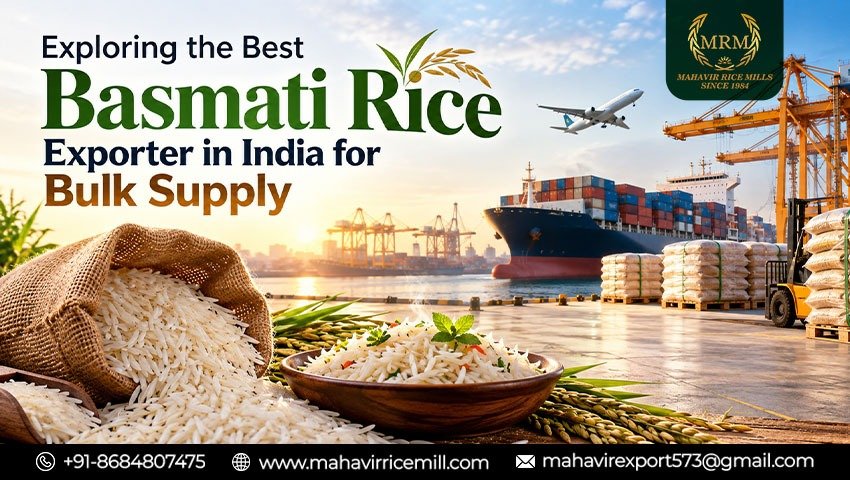

Basmati Rice Exporter In India - Basmati rice is known worldwide for its aroma soft texture and long grains. As the world wants high‑quality grains companies look for trustworthy trade partners to get real good stock. Partnering with a trusted Basmati Rice Exporter in India helps importers, wholesalers and distributors get grains that meet global standards. This blog will look at why choosing the exporting partner matters what varieties exist and how to check suppliers for smooth bulk orders.
What Makes Indian Basmati Unique?
Indian Basmati rice is aged in a way to improve its smell and keep it from sticking. The special land, weather and soil give this long‑grain rice its qualities.
Core Responsibilities of an Exporter
An established exporter manages supply chain operations to maintain product excellence across borders:
• Procurement: Getting raw paddy straight from trusted farm markets.
• Processing: Using the machines to remove the husk, clean, sort and polish rice.
• Quality Assurance: Carrying out lab tests to measure grain size, moisture level and the purity.
• Packaging and Compliance: Giving special moisture‑proof packaging that follows the rules of the country that receives the rice.

Key Factors in Selecting a Reliable Bulk Supplier
Choosing Basmati Rice Exporter In India needs a careful look at how it works what products it offers and its compliance records.
1. Variety and Product Portfolio
A top exporter should have grain types to meet different tastes and price levels:
• 1121 Basmati Rice: Famous for grains after cooking and strong aroma.
• Steam and Sella (Parboiled) Rice: Treated to keep nutrients and last longer good for catering.
• Sharbati and Traditional Basmati: Popular options that taste good and smell well priced fairly.
2. Infrastructure and Processing Capabilities
Good suppliers use processing units with optical sorters, de‑stoners and auto‑packaging. This helps avoid grain breakage remove dirt and keep quality in big batches.
3. Packaging and Private Labeling
Big buyers need packaging from 500g pouches to 1‑ton bags. Exporters that offer custom labeling help companies sell their own brand easily.
Streamlining Logistics and International Compliance
Global trade needs compliance with export rules and the food safety standards worldwide.
• Ensuring Regulatory Compliance
Good exporters have certificates from ISO, HACCP, GMP and food safety bodies. These certificates show the rice is cleaned well and has no chemicals.
• Efficient Global Supply Chain
On‑time delivery is key in trade. Trustworthy exporters keep links with shipping companies handle customs paperwork quickly and make sure the rice moves safely to places.
Conclusion
Buying amounts of high‑quality grains needs a reliable partner who can give steady quality, custom packaging and easy international shipping. From quality checks in modern processing to smooth compliance working with a trusted Basmati Rice Exporter in India ensures your business gets the best products that fit your market. For companies looking for a trade partner with decades of experience, good facilities and a worldwide reach Mahavir Rice Mills stands out as a reliable supplier who cares about quality and customer satisfaction.
FAQs
Ans: Minimum order quantities typically start from one 20 foot container depending on the packaging choices.
Ans: Exporters use moisture proof, sturdy packaging and perform thorough laboratory testing before the shipping.
Ans: Basmati rice is usually aged between nine to twenty four months for peak aroma.
Ans: Modern automated dryers precisely regulate the moisture levels to prevent the grain spoilage or mold.